March 3, 2025 12:00 PM - 1:00 PM
VPD 203 and Zoom
Panel
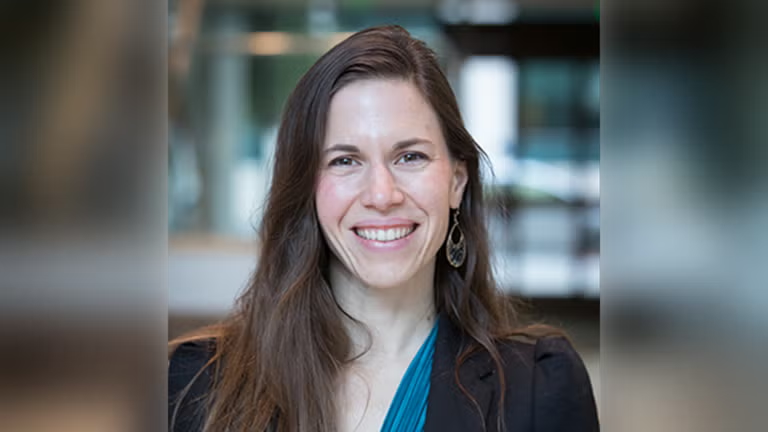
Jacqueline Torres | University of California, San Francisco
Jackie Torres is an Associate Professor in the Department of Epidemiology & Biostatistics at UC San Francisco. Her work examines the social determinants of health and health inequities, with a specific focus on the health of middle-aged and older adults. Her work triangulating evidence on socio-economic and psychosocial determinants of dementia risk with observational and quasi-experimental approaches is supported by an R01 and a recently awarded P01 by the National Institute on Aging. Dr. Torres received her PhD from UCLA, was a Robert Wood Johnson Health & Society scholar at UCSF and UC Berkeley, and was recently awarded the Presidential Early Career Award for Scientists and Engineers (PECASE), the highest honor bestowed by the United States government to scientists and engineers in the early stages of their research careers.
Abstract
Lifecourse epidemiology has long recognized the importance of intergenerational influences on health. However, the direction of these influences is typically described as flowing downward, from one generation to the next (e.g. from parent to child). A rapidly growing body of scholarship from economics, sociology, and public health has begun to consider the reverse – that is, whether the socio-economic status and resources of adult children flow ‘upward’ to influence the outcomes of their older parents. I will present both quasi-experimental and observational evidence on the impacts of adult child socio-economic status (e.g. educational attainment) on older parents’ health and wellbeing from across global settings. I will also touch on extensions of this work to other dimensions of social policy that might directly target young and middle-aged adults, with potential spillover effects on middle-aged and older parents.