October 27, 2025 12:00 PM - 1:00 PM
VPD 203 and Zoom
Panel
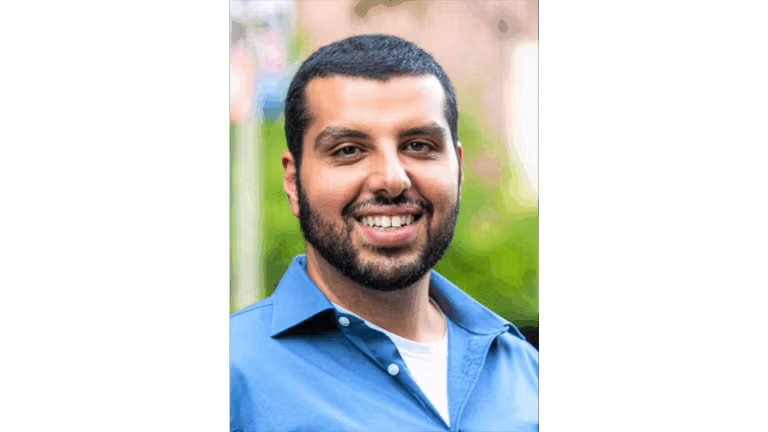
Adam Osman | University of Illinois
Adam Osman is an Associate Professor of Economics at the University of Illinois in Urbana Champaign and the co-Scientific Director of J-PAL MENA. He is a development economist whose work utilizes randomized experiments and economic theory to improve our understanding of which policies work best in improving the lives of the poor. His work covers several topics including access to finance, private sector development, labor markets, international trade and transport frictions, with a special emphasis on issues that affect the Middle East and North Africa (MENA) region.
Abstract
Firms often cite financing constraints as barriers, yet lenders rarely innovate beyond debt products. While theory suggests debt may dominate equity due to adverse selection and moral hazard, these mechanisms are hard to isolate empirically. We design and test a microequity product with Egyptian livestock farmers using a two-stage RCT that disentangles selection from contract effects. We find strong demand, with many participants being “equity-only,”- willing to accept lower financing probability to avoid debt. This group shows advantageous selection with lower delinquency than borrowers willing to accept either contract. However, holding selection fixed, equity causes a relative drop in net revenue and related performance metrics—evidence of moral hazard. A set of currency devaluations eliminated this negative effect, demonstrating that moral hazard varies with context. Our findings suggest microequity can enhance financial inclusion by attracting new clients, but managing moral hazard remains a primary, context-dependent challenge.