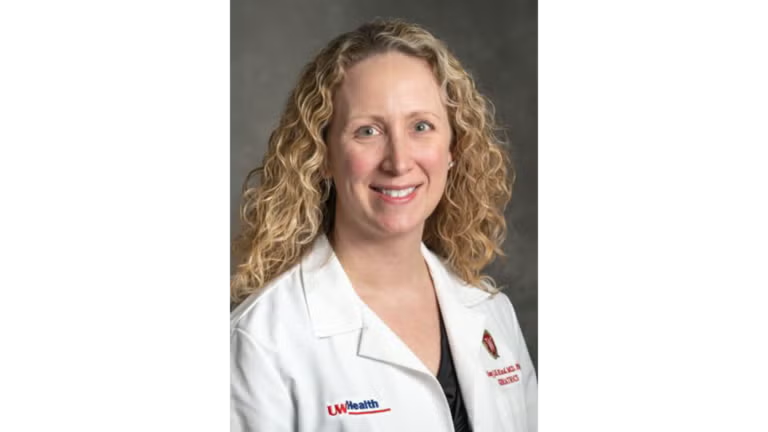
Featuring Amy Kind, University of Wisconsin
For more information on the seminar presentations, or if you would like to attend the presentation, or to meet with any of the speakers, please contact Dan Silver or Zach Wagner.
For more information on the brown bag presentations, or if you would like to attend the presentation or be added to our list for announcements, please contact Michele Warnock.
Abstract: The exposome encompasses the cumulative life-course exposure to physical, chemical, biological, and social influences that shape biology. The social exposome describes the way that socially constructed systems, institutions, geographic context, cultures, and socioeconomic circumstances influence biological health outcomes. These inherently holistic, human-centered frameworks allow for innovative, interdisciplinary investigations of human health and real-world precision public health interventions. In this presentation, Dr. Kind will provide an overview of the social exposome, its relationship to brain health, and its potential to catalyze meaningful, real-world change through precision public health intervention, using the city of Milwaukee’s lead water pipe mitigation strategy as an example. Dr. Kind will also introduce ‘The Neighborhoods Study’, an NIH-funded consortium of 24 Alzheimer’s Disease Research Centers (including USC’s) across the US collaborating to explore the relationship between the social exposome and Alzheimer’s disease and related dementias (ADRD). The study is the largest in the world to connect social exposome with brain tissues and their disease biomarkers, providing a highly unique resource for the ADRD research community. The Neighborhoods Study was recently renewed by the NIH for another 5-year funding cycle.
Bio: Amy Kind, MD, PhD is the inaugural Associate Dean for Social Health Sciences and Programs at the University of Wisconsin (UW) School of Medicine and Public Health. As Associate Dean, Dr. Kind oversees, creates synergies, and guides the growth of the school’s current and future initiatives, policies and programs that are designed to study and eliminate health disparities. She works closely with leaders in research, education, clinical, and public health realms to build capacity and ensure the advancement of health disparities research. As Associate Dean, Dr. Kind serves as Executive Director of the $517 million Wisconsin Partnership Program grant-making endowment, founding Director of the UW Center for Health Disparities Research, Chief Executive Officer of the rural-health focused Orion Initiative, and provides dean’s office oversight to the Milwaukee-based Center for Community Engagement and Health Partnerships. Dr. Kind is a Professor of Medicine and board certified as a geriatrician. A rural northern Wisconsin native, Dr. Kind obtained BS, MD and PhD degrees from the University of Wisconsin, residency training at Harvard’s Massachusetts General Hospital, and additional public leadership certifications from the Brookings Institute in Washington DC and the Executive Leadership in Academic Medicine program. Dr. Kind is an international expert in the field of disparities-focused exposome science, social determinants of health, and Alzheimer’s disease. Dr. Kind leads the team that developed the Neighborhood Atlas®, a free data democratization tool that quantifies the social exposome for every neighborhood in the US including Puerto Rico. Her work has catalyzed Congressional funding earmarks for exposome study, is heralded as a model for data democratization, and provides the foundation for hundreds of federal-, state- and local-level policy initiatives, including lead-line mitigation in inner city Milwaukee. She is routinely asked to advise state, federal, and international entities. Dr. Kind has earned multiple honors including the NIH/NIA Beeson Award, the American Geriatrics Society Award for Outstanding Scientific Achievement for Clinical Investigation, election as a Member of the American Society of Clinical Investigation (ASCI), election as a Member of the Association of American Physicians (AAP), and membership on a White House Task Force on Aging and Technology. Her work has been published in top journals including The New England Journal of Medicine and the Journal of the American Medical Association. She currently leads a multi-million-dollar research funding portfolio in active NIH grants, including serving as PI of the “The Neighborhoods Study”, an innovative 23 site national consortium linking ADRD neurobiology to social exposome life course exposures to unlock opportunities for ADRD precision health and prevention.
September 21, 2026 12:00 PM - 1:00 PM
VPD 203 and Zoom
Panel
Amy Kind, Wisconsin